All Products
Items 1-12 of 51
Note: Due to market demand, availability and pricing for memory and storage components may vary. Please contact our team to confirm current inventory and pricing
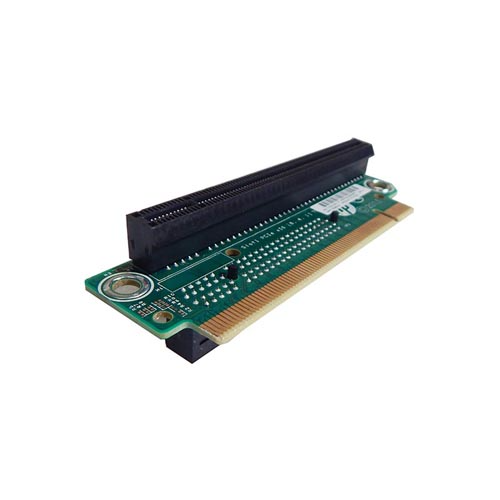
Stable riser cards increase server capacity by adding PCIe slots for GPUs, network adapters, and storage controllers. At iTechDevices, Dubai companies can get performance-based server riser cards that are compatible and efficient for hardware expansion.
Items 1-12 of 51
Server riser cards allow more PCIe connectivity in small server chassis. The expansion adapters enhance hardware scalability to new enterprise loads.
The PCIe risers can be used to add more expansion slots within the servers; high-bandwidth components such as GPUs, RAID controllers, and networking adapters can be easily configured.
|
PCIe Riser Card Type |
Slot Configuration |
PCIe Generation |
Ideal Use Case |
|
PCIe x16 Riser Card |
Single x16 slot |
Gen3 / Gen4 |
GPU or high-performance expansion |
|
PCIe x8 Riser Card |
Single x8 slot |
Gen3 |
Network interface cards |
|
Dual Slot PCIe Riser Card |
Two PCIe slots |
Gen3 |
Multi-adapter expansion |
|
Multi Slot PCIe Riser Card |
Multiple slots |
Gen3 / Gen4 |
Storage controllers and adapters |
Graphics accelerators, storage controllers, or networking modules can be added to enterprise servers and workstations using GPU and server expansion riser cards.
|
Expansion Riser Card Type |
Supported Hardware |
Application |
|
GPU Riser Card |
Graphics processing units |
AI workloads, virtualization |
|
Server Expansion Riser Card |
RAID / NIC adapters |
Storage or networking upgrades |
|
PCI Riser Card |
Legacy PCI hardware |
Backward compatibility systems |
Small and flexible PCIe riser cards suit small rack servers that have no internal space to spare.
|
Riser Card Design |
Feature |
Typical Usage |
|
Low Profile Riser Card |
Reduced height slot |
1U rack servers |
|
Flexible PCIe Riser Card |
Ribbon cable connection |
Custom chassis configurations |
|
Right Angle PCIe Riser Card |
90-degree slot orientation |
Space-optimized installations |
Enterprise server riser cards guarantee smooth hardware extension on the major server platforms. These are compatible, stable, and performance-maintaining components of the data center infrastructure.
The riser cards in the Dell Technologies PowerEdge servers must be designed with the exact fit of the motherboard layouts to provide consistency in the expansion of the PCIe and ultimate hardware capabilities.
|
Dell Server Riser Card Type |
Supported Slot |
Compatible Server Series |
Typical Use |
|
PCIe x16 Dell Server Riser Card |
x16 slot |
PowerEdge R740 / R750 |
GPU and accelerator cards |
|
PCIe x8 Dell Server Riser Card |
x8 slot |
PowerEdge R640 / R650 |
Network interface cards |
|
Multi-Slot Dell Riser Card |
Dual PCIe slots |
PowerEdge enterprise systems |
Multiple adapters |
HP Inc. and Hewlett Packard Enterprise system server riser cards support HP and Hewlett Packard Enterprise system users using additional PCIe with expansion storage, networking, and accelerator hardware.
|
HP / HPE Riser Card Type |
Slot Configuration |
Compatible Servers |
Use Case |
|
PCIe Gen3 HPE Riser Card |
x8 / x16 slot |
ProLiant Gen9 / Gen10 |
Storage controllers |
|
PCIe Gen4 HPE Riser Card |
x16 slot |
ProLiant Gen10 Plus |
GPU acceleration |
|
Dual Slot HPE Riser Card |
Two PCIe slots |
Enterprise rack servers |
Multiple expansion cards |
Supermicro server riser cards facilitate scalability infrastructure implementation by providing numerous expansion slots to small server platforms.
|
Supermicro Riser Card Type |
Slot Layout |
PCIe Support |
Best Application |
|
Dual Slot Riser Card |
Two PCIe slots |
Gen3 |
Networking and storage cards |
|
Multi Slot Riser Card |
Three or more slots |
Gen3 / Gen4 |
High expansion servers |
|
GPU Riser Card |
x16 slot |
Gen4 |
GPU computing systems |
Companies that are upgrading servers require solid riser cards that are compatible, stable, and efficient. Businesses throughout Dubai have been using reliable vendors such as iTechDevices to provide them with PCIe riser card models on an enterprise level.
Prices of server riser cards in Dubai differ according to generational PCIe and slot configuration, as well as compatibility with branded enterprise server systems.
|
Riser Card Type |
PCIe Support |
Typical Server Compatibility |
Use Case |
|
PCIe x8 Server Riser Card |
PCIe Gen3 |
Rack servers |
Network adapters |
|
PCIe x16 Server Riser Card |
PCIe Gen3 / Gen4 |
GPU-enabled servers |
High bandwidth hardware |
|
Dual Slot Server Riser Card |
Gen3 |
Enterprise servers |
Multiple expansion cards |
|
Low Profile Server Riser Card |
Gen3 |
1U compact servers |
Space-optimized expansion |
Organizations utilizing data centers must have dependable PCIe riser cards to increase server connectivity with networking, storage, and GPU accelerator hardware.
|
PCIe Riser Card Model |
Slot Layout |
Best Use Case |
Infrastructure Type |
|
PCIe Gen3 Riser Card |
x8 slot |
NIC expansion |
Enterprise servers |
|
PCIe Gen4 Riser Card |
x16 slot |
GPU workloads |
AI / HPC infrastructure |
|
Flexible PCIe Riser Card |
Cable extension |
Custom chassis |
Specialized builds |
|
Server Expansion Riser Card |
Multi slot |
Multiple adapters |
Data center systems |
A trustworthy riser card vendor guarantees businesses compatible parts for servers that are utilized in cloud computing, storage infrastructure, and virtualization.
|
Supplier Capability |
Benefit for Businesses |
|
Wide range of server riser cards |
Supports multiple server brands and models |
|
Enterprise hardware sourcing |
Access to genuine components |
|
Technical compatibility support |
Helps select the best PCIe riser card for servers |
A server riser card is an expansion native that enables the provision of more PCIe ports within a server chassis. It directs directly to the motherboard and repositions expansion slots either horizontally or vertically, allowing expansion cards to be installed, such as GPUs.
PCIe x16 riser cards have more bandwidth than PCIe x8 riser cards, and they are usually used with GPUs or high-performance accelerators, whereas x8 riser cards are usually used with network interface cards, storage controllers, and other server expansion devices.
No, riser cards tend to be model-specific to server and motherboard layouts. The compatibility varies according to the brand of the server, generation of PCIe, chassis form factor, or slot arrangement. One should select a riser card that is compatible with the architecture of a server.
Low-profile riser cards are a method of fitting a compact server chassis, which includes 1U rack servers. They give the opportunity to have PCIe expansion in an environment where there is a lack of space vertically, as well as ensuring good ventilation and placement of hardware within the system.
Yes, the graphics processing units can be supported by the servers through the use of GPU riser cards, which would give the appropriate PCIe slot orientation and spacing. They are typically applicable in workloads, virtualization, rendering, and high-performance computing environments.
Server riser cards are offered with a variety of PCIe generations, such as PCIe Gen3 and PCIe Gen4. Gen4 PCIe riser cards have an increase in bandwidth and are normally found in current enterprise servers, which have more bandwidth for transferring data.
IT hardware supply companies like iTech Devices will be able to sell enterprise server riser cards to the businesses, which will provide compatible PCIe expansion solutions to the servers in the Dubai market and the UAE market in general.