
 Quick Quote

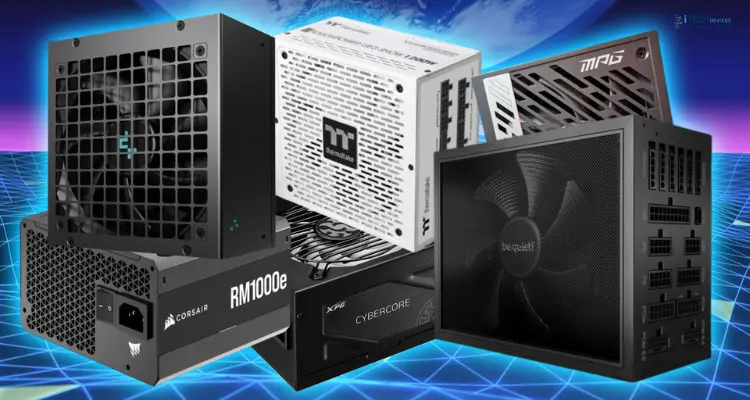


Buying a power supply sounds simple until you actually need one. Someone building a gaming PC, an electrician wiring a control panel, a lighting contractor installing LED strips, and a lab technician testing circuit boards are all technically shopping for "a power supply" — but they need completely different products.
This guide covers all of it. Whether you need a PC power supply unit (PSU), an industrial DC supply, an LED driver, or a bench supply for repair work, you'll learn how to identify the right type, size it correctly, and buy with confidence in the UAE — where heat, dust, and voltage conditions matter more than most international guides admit.
Power Supply Selection Guide
Before diving into specifications, start here. Match your application to a type, then read the relevant section below.
What Is a Power Supply?
A power supply converts electrical energy from one form to another so a device can use it safely — typically converting AC mains power (220–240V in the UAE) into the DC voltage a device actually needs, such as 12V, 24V, or 48V. Every power supply is defined by four core specifications: input voltage, output voltage, current (amperage), and wattage. Get any one of these wrong, and the device either won't run properly or won't run safely.
Which Type of Power Supply Do You Need?
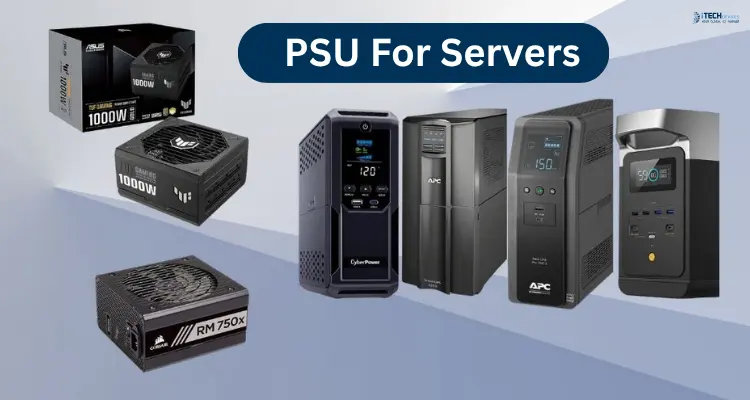
PC Power Supplies
A PC PSU converts mains AC into the multiple DC rails (+12V, +5V, +3.3V) that power your motherboard, CPU, GPU, and drives. For UAE buyers, three things matter most:
- Wattage — matched to your components, especially the graphics card
- 80 Plus certification — an efficiency rating (Bronze, Gold, Platinum, Titanium) that indicates how much energy is wasted as heat
- Modularity — modular and semi-modular PSUs let you attach only the cables you need, improving airflow inside the case
A mid-range gaming PC with a single GPU typically needs 550–750W, depending on the graphics card's rated power draw. High-end builds with power-hungry GPUs can require 850W or more. Always check the GPU manufacturer's recommended PSU wattage rather than guessing.
Industrial DC Power Supplies
Used in control panels, automation systems, and PLC-driven equipment, these are usually DIN-rail mounted SMPS units outputting a fixed DC voltage (commonly 24V). Selection here depends on continuous current draw, ambient temperature inside the cabinet, and build quality — since these units often run 24/7 for years without maintenance access.
LED Power Supplies and Drivers
LED lighting needs either a constant-voltage power supply (common for LED strips, typically 12V or 24V) or a constant-current LED driver (used for high-power LED fixtures where current, not voltage, must be regulated). Brands like Mean Well dominate this space in the UAE market because of their reliability across product lines such as LRS, HLG, ELG, and XLG series. Always check the IP rating if the fixture will be installed outdoors or in humid areas.
Bench and Laboratory Power Supplies
Technicians and hobbyists doing repair work or testing need an adjustable DC bench supply with variable voltage and current limiting — this protects both the technician and the device under test. Labs requiring precise measurements often prefer linear power supplies over switching designs because of lower electrical noise.
Linear vs Switching Power Supplies (SMPS)
Most modern applications — PC, LED, industrial — use switching power supplies because of their efficiency and compact size. Linear supplies remain relevant mainly where extremely low noise is critical, such as precision lab instrumentation.
How to Calculate the Right Wattage
The core formula is simple:
Required capacity = total expected load + safety headroom
Add up the wattage (or current × voltage) of everything the power supply will run continuously. For a PC, this means checking your CPU's TDP, GPU's rated power, and an allowance for storage and fans. For an LED project, multiply the LED strip's watts-per-metre by total length. For industrial panels, sum the current draw of every connected device on that DC rail.
How Much Headroom Do You Actually Need?
Never size a power supply to run at exactly 100% of calculated load. Manufacturers commonly suggest adding roughly 20–30% headroom above your calculated maximum, though the right figure depends on the situation. Reasons to add more headroom include:
- Inrush or startup current spikes (motors, PC boot-up, LED strips at power-on)
- Ambient heat, which reduces a supply's usable output (thermal derating)
- Future expansion — adding more LEDs, drives, or devices later
- Continuous 24/7 duty cycles, which age components faster near full load
There's no single universal number that fits every scenario — a PC builder, an industrial engineer, and an LED installer will each apply headroom slightly differently. Treat 20–30% as a sensible starting point, not a fixed rule.
Voltage and Current: What Should You Check?
Before buying, confirm three things on the datasheet or nameplate:
- Input voltage range — must be compatible with UAE mains supply
- Output voltage — must exactly match what your device requires
- Rated current (amperage) — must meet or exceed your device's draw
Choosing a Power Supply for UAE Conditions
This is where most generic buying guides fall short, and where local conditions genuinely change the decision.
UAE summers regularly push ambient temperatures above 45°C outdoors, and enclosed spaces — rooftop plant rooms, unventilated cabinets, outdoor signage enclosures — can run significantly hotter than the surrounding air. Heat directly affects power supply reliability in a few specific ways:
- Operating temperature rating: Check the datasheet's rated ambient temperature range (commonly -20°C to 60°C for industrial units). A supply rated only up to 40°C may be undersized for a poorly ventilated UAE installation.
- Thermal derating: Most power supplies reduce their maximum safe output as ambient temperature rises. A unit rated for 100W at 25°C might only deliver 70–80% of that at 50°C. If you're sizing close to the limit, factor this in.
- Ventilation and enclosure design: Cabinets in warehouses, rooftop installations, or direct sun exposure need active ventilation or forced-air cooling, not just a sealed box.
- Dust ingress: Combined with heat, dust buildup on heatsinks and fans reduces cooling efficiency over time — a common cause of premature failure in industrial and outdoor UAE installations.
- Continuous load in heat: Running a power supply near full capacity in a hot environment shortens component life faster than the same load in a cooler climate.
Efficiency Ratings Explained
Efficiency measures how much input power is actually converted to usable output versus lost as heat. For PC PSUs, this is expressed through 80 Plus certification tiers:
Higher efficiency means less wasted heat, lower electricity cost over time, and — relevant in UAE conditions — less internal heat for the PSU itself to manage. For industrial and LED power supplies, look for stated efficiency percentages on the datasheet rather than a certification badge, since 80 Plus is a PC-specific standard.
Important Protection Features
Reliable power supplies include built-in protection circuits. Look for these on the datasheet:
- OVP (Over-Voltage Protection) — shuts down if output voltage exceeds safe limits
- OCP (Over-Current Protection) — prevents damage from excessive current draw
- OTP (Over-Temperature Protection) — shuts down or throttles output if internal temperature gets too high
- SCP (Short-Circuit Protection) — protects against wiring faults or shorts
Modular vs Non-Modular PC PSUs
- Non-modular: All cables are permanently attached. Cheapest option, but unused cables clutter the case.
- Semi-modular: Essential cables (motherboard, CPU) are fixed; others are detachable.
- Fully modular: Every cable is detachable. Best airflow and cable management, at a higher price point.
What Power Supply Brands Should You Consider?
Brand reputation matters more in this category than most, because a failing power supply can damage everything connected to it.
- PC PSUs: Corsair, Seasonic, Cooler Master, EVGA, and be quiet! are widely trusted for build quality and warranty support.
- LED and industrial supplies: Mean Well is the dominant name across the UAE and wider GCC market for both LED drivers and DIN-rail DC supplies, known for consistent quality and long product lifespans.
- Lab/bench supplies: Keysight, Rigol, and Korad are common choices for technicians who need accuracy and stable regulation.
Conclusion
Choosing a power supply isn't about finding the highest wattage or the cheapest unit — it's about matching the right type to your application, sizing it correctly with proper headroom, and accounting for UAE-specific conditions like heat and ventilation. Whether you're building a gaming PC, wiring an industrial panel, installing LED lighting, or setting up a lab bench, the same core principles apply: know your application, check your specifications, and never skip the protection features. Get these fundamentals right, and your power supply will run reliably for years rather than becoming a recurring point of failure.
FAQs
How do I know which power supply to buy?
Start with your application, then confirm the required output voltage and current, calculate your total load, add headroom, and check that the operating temperature rating suits your installation environment.
Can I use 240V equipment in the UAE?
Yes. UAE mains power runs at 220–240V, 50Hz, so equipment rated for this range works directly. Always check the input voltage label before connecting anything designed for a different standard, such as 110V US equipment.
How much wattage do I need?
Add up the power draw of everything the supply will run continuously, then add roughly 20–30% headroom to account for startup spikes, heat, and future expansion.
Which power supply is best for LED lights?
Constant-voltage supplies suit LED strips (typically 12V or 24V), while constant-current LED drivers are needed for high-power fixtures where current regulation is critical.